
CALL NOW!

Charlottesville Hail & Storm Damage: What Homeowners Should Know After this Summer’s Severe Weather
Read More Content
If you've started pricing a new roof, you've probably noticed the numbers online are all over the place. One site says $8,000. Another says $30,000. Both can be right, and neither one tells you what your home will cost. Here's the straight answer on roof replacement...
After a major storm or suspected damage, the first move is a thorough inspection. Don’t rely on your own eyes from the ground — many types of storm damage (like lifted shingles or granule loss) aren’t obvious. A trained roofing expert knows exactly what to look for...
When a roof starts leaking, it can feel like a sudden crisis. Water stains appear on ceilings, drips echo in quiet rooms, and you’re left wondering what went wrong. The truth is, most leaks start long before they show up inside. Spotting the signs early—and knowing...
Reviews
Office Number
443-771-7495
HQ Address
320 Loucks Rd
Unit #202,
York,
PA 17404
Certifications
MHIC#150886
WV064864 Residential
PA188526
VA(Class A) #2705194130
HAAG ID – 202208042
GAF MASTER ELITE ID – 1139673
OC CERTIFICATION – 239249
Copyright © 2026 – Priddy Roofing and Exteriors | Site Map
Built By: Southern Maryland SEO
If your home was in the path of one of Southern Maryland’s storms this summer, you probably don’t need a roofer to tell you how intense the weather was. You heard it. Hail hitting the roof. Wind pushing against the house. Branches coming down.
Rain hitting hard enough that you start wondering whether everything above you is still doing its job.
And when the storm passes, the uncertainty doesn’t necessarily leave with it.
Your roof may look completely normal from the driveway.
That doesn’t always mean it came through untouched.
Southern Maryland experienced several rounds of severe thunderstorms during July 2026, including storms capable of producing damaging winds and hail across Calvert, Charles and St. Mary’s counties. On July 4, the National Weather Service warned portions of Calvert and St. Mary’s counties about 60 mph wind gusts and quarter-size hail, with Saint Leonard, Calvert Beach, Port Republic, Long Beach, Flag Harbor and surrounding communities among the locations in the storm’s path.
For the families who were affected, this isn’t really a story about weather statistics. It’s about figuring out what happened to your home—and what, if anything, you need to do next. Here’s what Southern Maryland homeowners should know.
The storms didn’t slow down, bringing damaging winds, heavy rain, lightning, falling trees, and hail. On August 14, one of the month’s most powerful thunderstorms developed in the Mid-Atlantic.
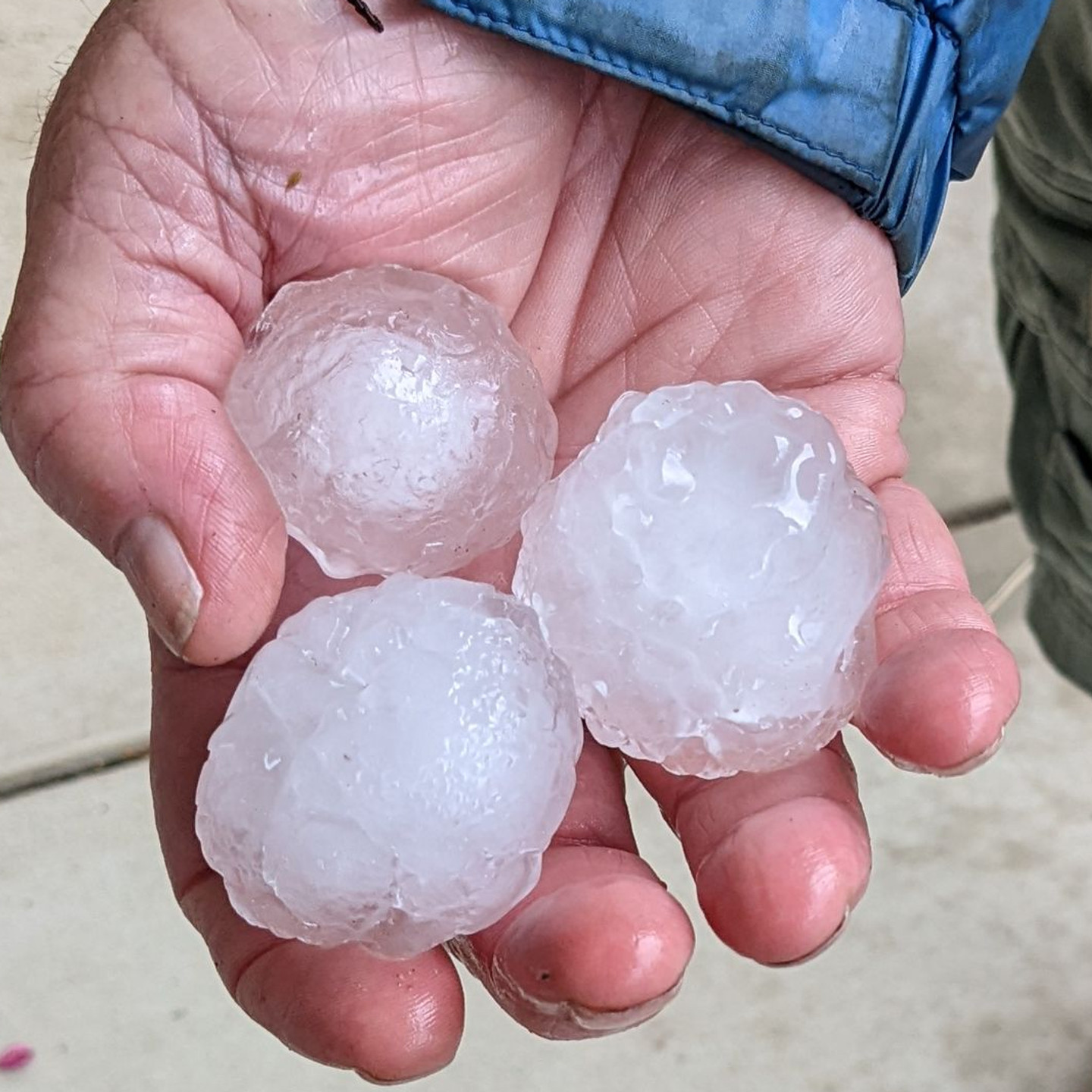
The storm became particularly intense around Charlottesville, Virginia, where a National Weather Service damage survey estimated winds reaching 90 mph and documented hailstones measuring approximately 2 to 2.5 inches. The NWS described the storm as a powerful supercell and determined that some of the most significant damage was likely caused by an intense microburst.
The August 14 Storm Shows How Quickly a Summer Thunderstorm Can Become Destructive
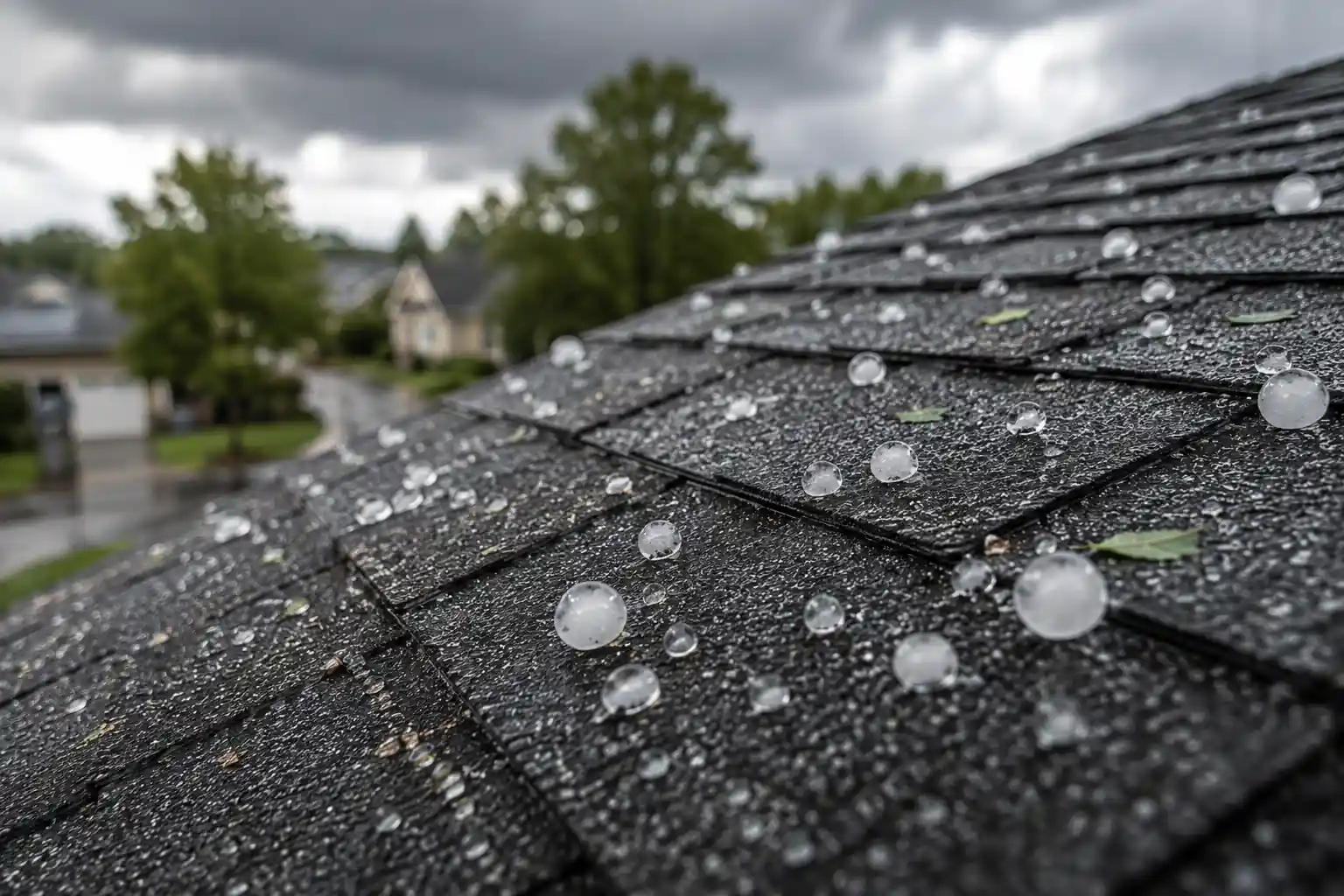
The National Weather Service ultimately estimated peak straight-line winds of approximately 90 mph along a 2.4-mile damage path. Investigators also documented hailstones in the 2-to-2.5-inch range. That’s roughly between the size of a ping-pong ball and a tennis ball.
The event is a useful reminder for homeowners throughout the Mid-Atlantic:
A summer thunderstorm doesn’t need to last all day to cause significant property damage.
Southern Maryland Had Already Been Hit by Severe Weather Days Earlier
For Priddy Roofing’s customers, the most locally relevant event occurred only four days earlier.
On August 10, the National Weather Service issued a Severe Thunderstorm Warning covering portions of Charles, Calvert, and St. Mary’s counties.
At 5:29 p.m., the storm was located over Waldorf and moving east at approximately 45 mph.
The National Weather Service warned of 60 mph wind gusts capable of knocking down trees and large branches, damaging homes and vehicles, blocking roads, and causing localized power outages.
The communities identified in the warning included:
- Waldorf
- La Plata
- Prince Frederick
- Chesapeake Ranch Estates
- Chesapeake Beach
- Lusby
- Saint Leonard
- Huntingtown
- Hughesville
- Saint Charles
- Golden Beach
- Breezy Point
- Flag Harbor
- Calvert Cliffs
Those aren’t distant storm reports.
They’re communities where Southern Maryland homeowners live and where Priddy Roofing works.
The August 10 Storm Continued Across Calvert and St. Mary’s Counties
The storm didn’t stop after moving through Charles County.
Later that evening, additional severe thunderstorm warnings were issued for southeastern Calvert and St. Mary’s counties.
At 5:50 p.m., the National Weather Service tracked the storm near Prince Frederick, still moving east at approximately 45 mph with the potential for 60 mph wind gusts. The warning included Mechanicsville, Charlotte Hall, Huntingtown, Saint Leonard, Lusby, Calvert Beach, Port Republic and surrounding communities.
Farther south, another warning was issued for southeastern St. Mary’s County as storms continued through areas including Lexington Park, St. Mary’s City, Dameron, Park Hall, Ridge and Point Lookout.
That’s important when we’re talking about roof damage.
Southern Maryland wasn’t dealing with an abstract regional forecast.
Severe storms were actually moving over communities throughout Priddy’s service area.
Then More Severe Weather Arrived
August 10 wasn’t the end of it.
By the evening of August 16, another line of severe thunderstorms was crossing Charolletesville Virginia and Southern Maryland.
At 9:28 p.m., the National Weather Service reported severe thunderstorms stretching from east of Waldorf through Golden Beach and areas southeast of La Plata toward Popes Creek.
Another Severe Thunderstorm Warning was issued for portions of Charles, Calvert and St. Mary’s counties, again carrying a threat of 60 mph winds.
That changes the way homeowners should think about August.
This wasn’t necessarily one storm followed by three weeks of perfect weather.
Some properties experienced multiple rounds of wind, rain and thunderstorms within days of one another.
And that matters to a roof.
Your Roof Doesn’t Experience Storms One at a Time
A roof doesn’t reset itself after every thunderstorm.
Imagine a shingle is slightly lifted during the first storm.
It doesn’t come completely off.
From the driveway, nothing looks wrong.
Then another storm arrives.
Wind catches the weakened edge again.
Rain is driven underneath it.
A branch hits another portion of the roof.
The problem that began during one storm may become more significant during the next.
That’s why looking at the entire stretch of August weather can be more useful than focusing exclusively on one storm date.
Hail Damage Can Be Difficult to See From the Ground
The dramatic August 14 hail reports also raise a question homeowners frequently ask:
What would hail damage actually look like on my roof?
Usually, it doesn’t look like a hole punched through the house.
On an asphalt-shingle roof, hail can potentially cause:
- Granule loss
- Bruising
- Impact marks
- Cracking
- Exposed asphalt
- Ridge-cap damage
- Dented vents
- Damaged flashing
- Gutter dents
- Downspout damage
The severity depends on far more than simply whether hail fell.
Hailstone size, wind speed, roof age, roofing material, impact angle, storm duration and the condition of the existing roof can all influence the outcome.
That’s why you shouldn’t assume your roof needs replacement simply because hail was reported nearby.
You inspect the property.
Then you make the decision.
Wind May Be the Bigger Local Concern From Southern Maryland’s August Storms
This distinction is especially important for this particular stretch of weather.
While the August 14 Charlottesville storm produced confirmed very large hail, the August 10 Southern Maryland warnings were primarily damaging-wind events.
The National Weather Service warned of maximum gusts around 60 mph across Charles, Calvert and St. Mary’s counties.
Wind damage can include:
- Lifted shingles
- Broken shingle seals
- Creased shingles
- Missing shingles
- Loose ridge caps
- Damaged flashing
- Gutter damage
- Tree or limb impacts
- Wind-driven rain intrusion
And some of that damage can be surprisingly difficult to identify from the yard.
A shingle can lift during the storm and settle back down afterward.
It may look normal.
Its seal may no longer be intact.
Don’t Climb Onto the Roof Yourself
After a storm, homeowners naturally want to know what happened.
But climbing onto the roof isn’t the best place to start.
Storm debris, wet shingles, damaged roofing material and steep slopes can create unnecessary risk.
Instead, walk around the property from the ground.
Look for:
- Shingles in the yard
- Pieces of roofing material
- Fallen branches
- Dented gutters
- Damaged downspouts
- Loose siding
- Damaged window screens
- Tree impacts
- Debris sitting on the roof
Then check inside.
Look at ceilings, upper-level rooms and accessible attic areas for new water staining or moisture.
If you have active water intrusion, don’t wait for it to become worse.
A Roof Can Be Damaged Without Leaking Today
This is where storm damage gets frustrating.
No leak today doesn’t necessarily mean there isn’t a problem.
A storm can compromise part of a roofing system without immediately creating enough of an opening for water to enter the house.
Then another thunderstorm arrives.
Or autumn rain.
Or winter freezing and thawing.
What started as a small vulnerability becomes a leak months later.
Priddy Roofing recommends professional inspection after significant storms because wind and hail damage can be difficult for homeowners to identify from ground level. The company’s St. Mary’s County roofing guidance specifically notes that hidden storm damage may not be visible without inspecting the roof itself.
Calvert County Homeowners Should Pay Particular Attention to August 10
Calvert County was directly in the path of the August 10 severe weather.
The National Weather Service warnings specifically included communities such as:
Prince Frederick, Huntingtown, Saint Leonard, Lusby, Chesapeake Beach, Chesapeake Ranch Estates, Calvert Beach, Port Republic, Breezy Point and Flag Harbor.
Priddy Roofing serves homeowners throughout Calvert County, including St. Leonard, Lusby, Solomons, Huntingtown, Chesapeake Beach, North Beach and Owings.
If you remember particularly strong winds, branches coming down, or exterior damage around your property that evening, having the roof checked is reasonable.
It doesn’t mean something is necessarily wrong.
It means there was enough severe weather in the immediate area to justify finding out.
St. Mary’s County Experienced Multiple Rounds Too
St. Mary’s County was affected by the August 10 storms and then again by subsequent severe weather.
Communities appearing in National Weather Service warnings included Mechanicsville, Charlotte Hall, Lexington Park, St. Mary’s City, Ridge, Dameron and Park Hall, among others.
Priddy Roofing provides storm-damage assessment, roof repair and replacement services throughout St. Mary’s County.
If your home experienced one or more of these storms, the inspection isn’t about finding a reason to replace your roof.
It’s about establishing its condition after the weather passed.
Charles County Was Where the August 10 Storm Entered the Area
Charles County homeowners were on the front edge of the August 10 event.
At 5:29 p.m., the National Weather Service located the severe thunderstorm over Waldorf, moving east at approximately 45 mph. The warning included Waldorf, La Plata, Saint Charles and Hughesville before the storm continued east toward Calvert County. For Priddy Roofing, that’s especially close to home.
The company’s headquarters is located in La Plata, placing its team directly within the Southern Maryland communities affected by these storms. This isn’t weather happening somewhere else in Maryland. It’s happening where we live and work too.
Be Careful With Anyone Who Shows Up Promising You a New Roof
After severe weather, roofing companies often arrive quickly.
Some are legitimate. Some aren’t.
Homeowners who are already worried about their property can become easy targets for aggressive sales tactics.
Someone shouldn’t be able to look at your neighborhood from their truck and tell you insurance owes you a roof.
Your house needs to be inspected.
If damage is present, it should be documented.
If the roof is fine, you should be told that too.
A responsible storm inspection starts with evidence—not a sales pitch.
Document What You Can
If you noticed damage during any of August’s storms, keep records.
Take photographs of things you can safely see:
- Fallen shingles
- Branch damage
- Dented gutters
- Damaged siding
- Water stains
- Window damage
- Fallen trees
- Hail on the property
- Other exterior damage
If you have photographs or video from the actual storm, keep those as well.
And if a roofing professional inspects the property, ask them to document what they find.
That creates a much clearer record of the home’s condition.
Priddy Roofing’s project gallery includes examples of completed storm-damage and insurance-related roof replacements, giving homeowners a look at the type of restoration work the company performs.
Don’t Assume Storm Damage Automatically Means an Insurance Claim
Finding damage and determining insurance coverage are two different things.
A roofing contractor can inspect the roof.
They can photograph what they find.
They can explain whether the condition appears consistent with storm damage and what repair or replacement may be necessary.
Your insurance carrier determines whether a particular loss is covered under your policy.
That distinction matters.
The first question shouldn’t necessarily be:
“How do I get insurance to buy my roof?”
It should be:
“Was my roof actually damaged?”
Everything else follows from that answer.
Sometimes the Best Result Is Finding Nothing
After watching storms move through the area, hearing hail or seeing branches come down, homeowners understandably worry.
An inspection can provide an answer.
Sometimes that answer is a damaged roof.
Sometimes it’s a repair.
And sometimes it’s:
Everything looks good.
That’s a good outcome.
A professional inspection shouldn’t begin with the assumption that something needs to be sold.
It should begin with the condition of the home.
Southern Maryland Has Been Through a Rough Stretch of Weather
The August 14 supercell showed just how powerful thunderstorms in our region can become.
For Southern Maryland homeowners, the more important story is what happened around it.
On August 10, severe storms moved directly from Waldorf and La Plata through Calvert County and into St. Mary’s County, carrying warnings for damaging 60 mph winds.
Then additional severe thunderstorms returned to Southern Maryland on August 16.
That’s a lot of weather for a roof to absorb in less than a week.
If your home was in the path of those storms and you’re unsure whether the roof was affected, you don’t need to assume the worst.
You just need an answer.
Priddy Roofing & Exteriors serves homeowners throughout Southern Maryland and provides professional roof inspections, storm-damage assessment, repairs and roof replacement when necessary.
If we inspect your roof and find storm damage, we’ll show you what we found and explain the next steps.
If the roof is okay, that’s worth knowing too.